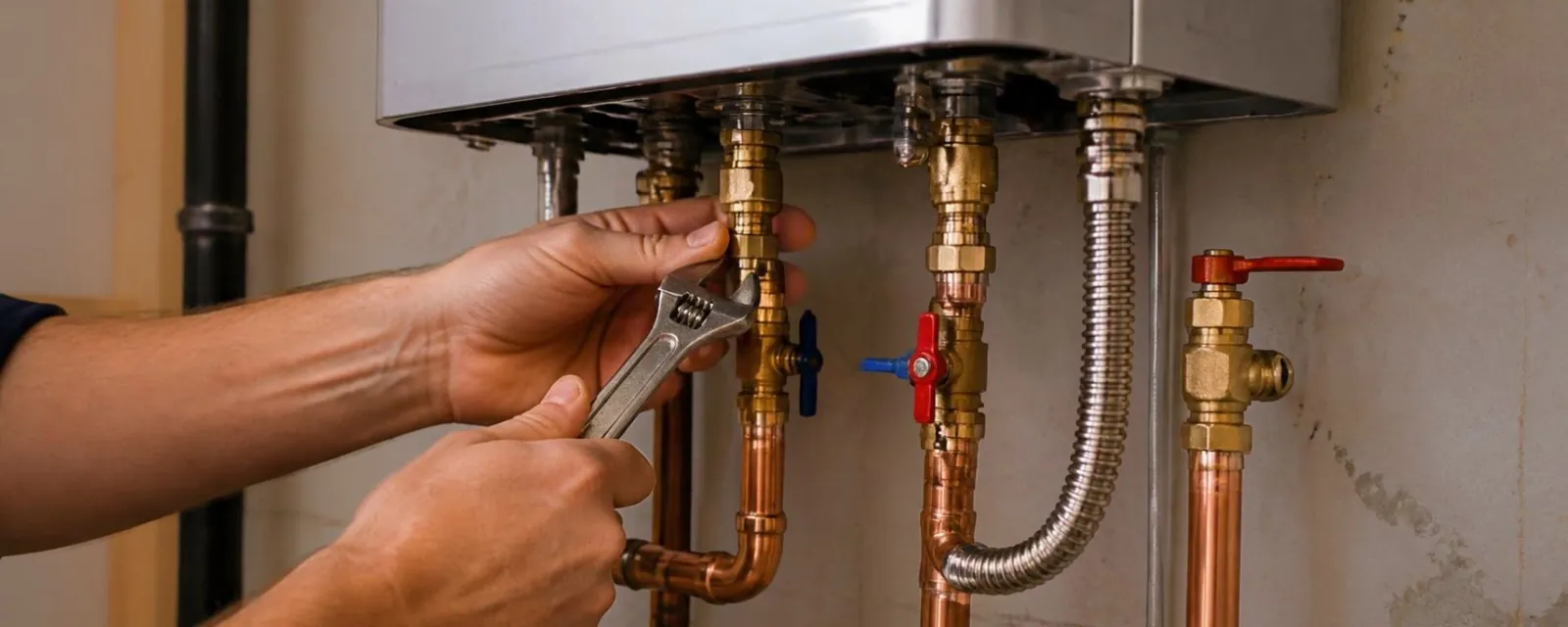
Installation is different from a quick swap
A replacement puts a new heater where the old one stood. A new installation means deciding where the heater goes, how it is vented or powered, how water gets to it and where the drain and relief line terminate. Those decisions affect cost, safety and how well the system works for the next decade.
If your old unit has simply failed, our water heater replacement page covers that faster path.
How a planned installation runs
Site visit
We look at the proposed location, the supply lines and the electrical or gas service.
Written plan and price
You receive the equipment choice, installation scope and price before work starts.
Permit and install
We pull the permit, set the unit, connect and vent it, and test.
Inspection and handoff
We walk through the shutoffs, the relief valve and basic maintenance.
Where the heater goes matters in Salisbury homes
Salisbury has houses from nearly every period. Fulton Heights bungalows from the early 1900s, mid-century ranches and newer subdivisions all hide water heaters in different spots, from garages and closets to attics and crawl spaces. Each spot has its own clearance, drainage and venting needs.
In older homes we often find that the existing heater location was chosen decades ago for reasons that no longer apply. Moving it can improve access and shorten pipe runs, but it should be planned and permitted, not improvised.
What we confirm before installing
These checks prevent surprises on installation day.
- Clearance around the unit and access for future service.
- Combustion air and venting for gas units, or circuit capacity for electric ones.
- A safe drain path for the pressure relief discharge pipe.
- Whether a drain pan is needed to protect floors below.
- An expansion tank if the plumbing has a closed system.
- Permit requirements through Salisbury Development Services.
Fuel options for a new installation
| Fuel | Strength | Consideration |
|---|---|---|
| Natural gas | Fast recovery, lower running cost where available | Needs a gas line and proper venting. |
| Electric | Simple installation, no combustion | Needs adequate circuit capacity. |
| Propane | Works where natural gas is not available | Needs a tank or service arrangement. |
If gas piping changes are part of the plan, we confirm the scope and who performs it before the quote is final.
What affects the price of a new installation
A new location usually costs more than a swap. These are the main reasons.
Insurance does not normally cover a planned installation. If you are installing as part of an insured repair, ask your adjuster what documentation they want.
To plan an installation, call (704) 951-1635.
What you get when the installation is finished
You get a heater that is level, supported, connected with proper shutoffs and tested for leaks and temperature. The relief valve discharges to a safe location, and any vent or electrical connection is checked before we leave.
We also show you where the shutoffs are and how to drain a few gallons for maintenance. That five-minute walkthrough prevents most of the calls we get later.
Matching the new unit to your hot water use
A household of one or two uses far less hot water than a family of five, and the right unit differs. We calculate a first-hour rating or flow rate that fits the way you live.
Oversizing wastes energy and money. Undersizing leaves you with cold showers. A short conversation about your habits solves both.
Planning a project?
Call during business hours or anytime for an on-site look and a clear price.
Installation questions answered
A straightforward install in a good location often takes a day or less. New piping, venting or electrical work can extend that, and we will tell you in advance.
Yes. Removing and disposing of the old unit is part of the job when we are replacing one.
Yes. Tankless installs often need larger gas lines or higher electrical capacity and new venting. Our tankless water heater page explains what to expect.
Planned installations are typically permitted, and inspections confirm the work meets the plumbing section of the North Carolina State Building Code, which is based on the International Plumbing Code (IPC).
Yes. If your heater has failed and you need hot water fast, call for emergency water heater repair or replacement at any hour.