Everything is backing up: first steps
A blocked main line pushes waste back up the lowest drain in the house, usually a basement or ground-floor tub, shower or floor drain. Each flush or load of laundry makes it worse.
Call (704) 951-1635. Tell us which drains are backing up and whether you know where your cleanout is.
- Stop all water use.
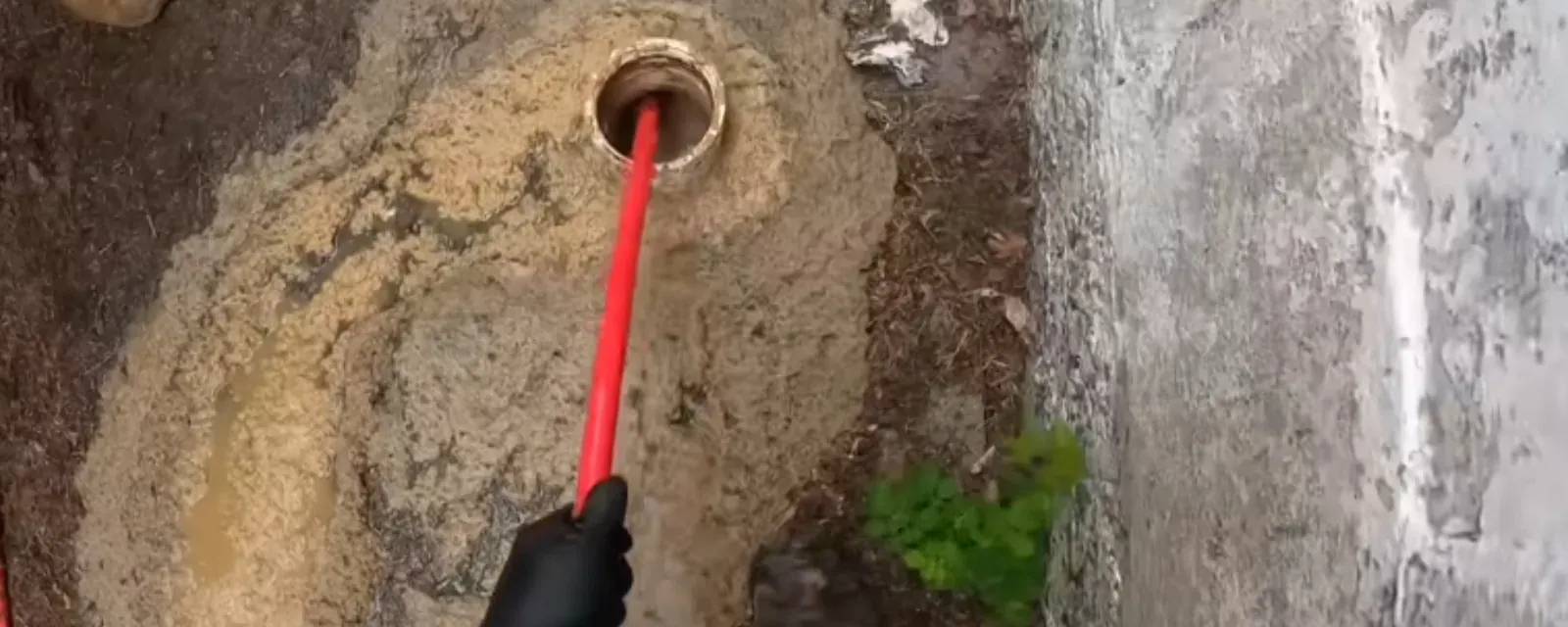
- Locate the cleanout, which is usually a capped pipe near the foundation or in the yard.
- Do not open a cleanout under pressure.
- Keep people away from standing wastewater.
What blocks a main sewer line
Main lines clog from grease, flushed wipes, roots and sometimes from a pipe that has sagged and caught debris. Which cause it is determines whether a simple cleaning is enough.
A clean line often runs fine for years, and a line with roots may be clear for six months and then clog again. We tell you which situation we found and whether a repair should come next, like sewer line repair.
Clues the main line is the problem
Several drains slow together
A shared line is restricted.
Gurgling toilets
Air is being pushed through water in the trap.
Backups in the lowest fixture
Waste follows gravity out the nearest opening.
Wet or sunken spot over the line
The pipe may be broken, not just blocked.
Why root clogs are common near older Salisbury streets
Older neighborhoods have mature trees, and roots seek the moisture that leaks from sewer joints. Once inside, they grow into a mat that catches paper and grease.
Cleaning cuts the roots back, but it does not remove them from the joint. If you see them repeatedly, ask about a camera look and a lasting fix.
Cleaning options for main lines
| Approach | What it does | How long it lasts |
|---|---|---|
| Cable with root cutter | Cuts roots and opens flow | Months to a year or more if roots persist. |
| Hydro jetting | Scours walls and flushes debris | Longer if the pipe is sound. |
| Camera inspection | Shows what the line looks like | Not a cleaning method. |
What affects main line cleaning prices
Main line cleaning is quoted after we know access and condition.
Insurance usually treats cleaning as maintenance. Water backup coverage may help if the backup damaged finished spaces.
For a clear price, call (704) 951-1635.
When cleaning is enough and when it is a warning sign
A one-time blockage from a flushed item or a grease slug is a cleaning problem and nothing more. A blockage that returns every few months is a warning that something in the pipe is catching debris.
Track how long the line stays clear after cleaning. If it is under a year, ask for a camera look, because the fix may be a small repair now that avoids a big one later.
Cleanouts: the small fitting that makes a big difference
A cleanout is a capped pipe that gives direct access to the sewer line. With one, a plumber can clear the line from outside the house and keep a mess out of your living space.
Many older homes have no accessible cleanout, so the work has to be done through a toilet or roof vent. Adding one is a modest project that pays off every time the line needs service. Ask us about it during your visit.
Code and standards for sewer line cleaning
Main line cleaning is maintenance, but the cleanout you use to reach the line is a code item under the International Plumbing Code (IPC) as adopted in North Carolina.
If a cleanout is missing or buried, adding one is regulated work and is worth doing at the same visit.
Main line blocked?
Call now. We are open 24/7.
Questions we hear from Salisbury homeowners
Yes. We answer 24/7, and main line backups get priority scheduling when availability allows.
Look for a capped pipe, often about four inches wide, near the foundation or in the yard between the house and the street. Older homes may not have one, and we can add one during the visit.
Many main line cleanings take a couple of hours. Heavy roots or poor access take longer.
We recommend a camera inspection after any serious blockage, so you know what caused it.
It helps, especially for grease and paper. If roots or a break caused it, expect the problem to return until the pipe is repaired. For stubborn buildup consider hydro jetting.