If you suspect an active leak, slow the damage first
A hidden leak can run for weeks before it shows. Once you see water stains, warped flooring or a musty smell, the pipe has been wet for some time and the damage grows every day.
Shut off the main if water is visible, then call (704) 951-1635. If the leak is slow and contained, tell us and we will schedule the first available visit.
- Close the main shutoff if water is spreading.
- Photograph stains and wet spots with the date.
- Move furniture and rugs off wet floors.
- Do not cut into drywall yourself, because it can hide the source.
Symptoms that point to a leak you cannot see
Your water bill climbed with no change in habits
Salisbury-Rowan Utilities serves more than 21,000 meters, and a sudden rise in your usage on a bill is often the first sign of a leak. Compare a few months of bills before assuming it is seasonal.
The meter moves with everything off
Turn off every fixture and appliance, then watch the meter's low-flow indicator. If it keeps turning, water is escaping somewhere between the meter and your fixtures.
Warm spots on the floor
A warm patch on a slab floor can mean a hot water line leaking beneath the concrete, a classic slab leak.
Sounds in the walls or under the floor
Hissing or running water when nothing is on usually means pressurized water is escaping.
How we find leaks without demolition
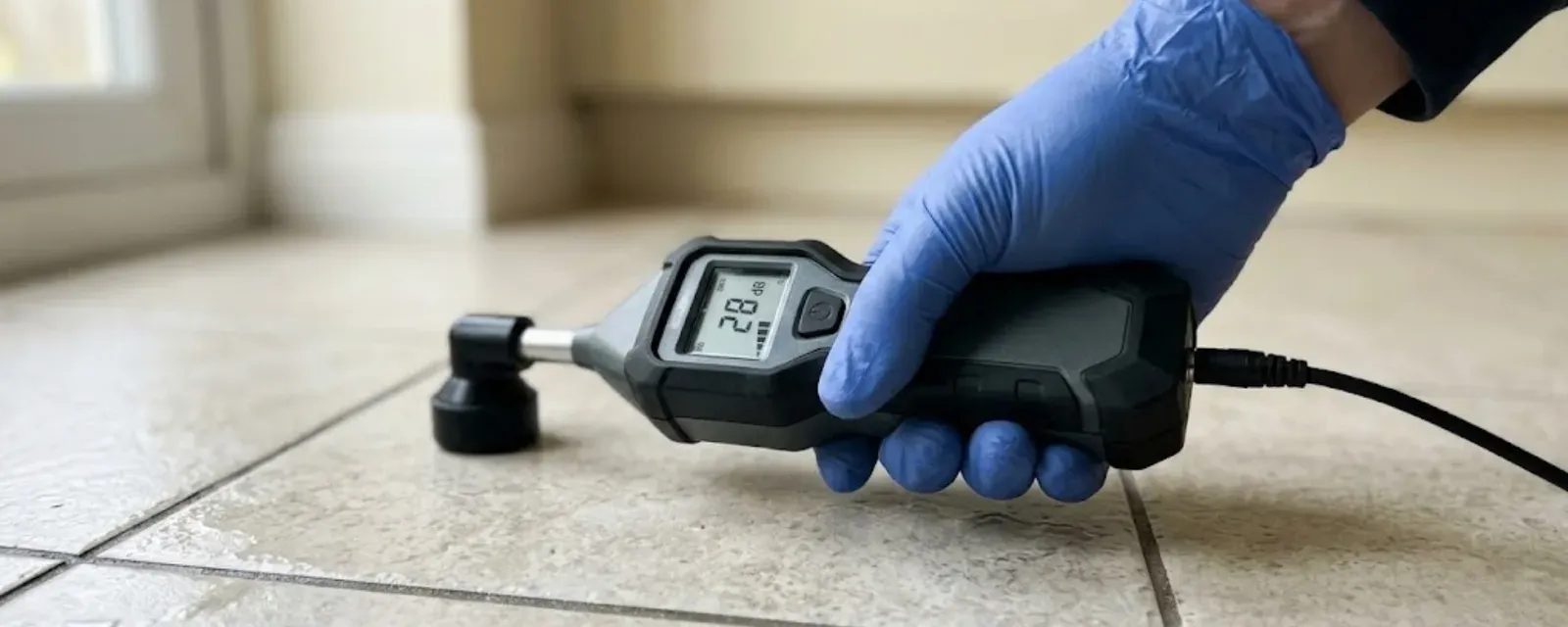
We start with a pressure test and a meter check to confirm a leak exists and learn roughly which part of the system it is in. Then we narrow it down with acoustic listening equipment, thermal imaging and tracer methods, depending on what the pipes and floors allow.
The aim is to mark the exact spot, so that any opening in the wall, floor or yard is small and precise. If the pipe is repairable in place, we repair it. If it is part of a failing system, we explain when repiping makes more sense than another patch.
Where leaks hide in Salisbury homes
Under slabs
Hot and cold lines in concrete slabs can corrode or rub through over time.
In crawl spaces
Older supply lines and fittings drip into soil where nobody looks.
In walls
Supply stubs and connections behind tubs and sinks.
Between meter and house
The yard line can leak with no sign above ground.
Irrigation and hose bibs
Outdoor connections fail and drain slowly.
Water heater connections
Small seeps rust fittings and floors.
Methods and what they find
| Method | What it tells us | Limits |
|---|---|---|
| Meter check and pressure test | Whether a leak exists and where in the system | Does not pinpoint the spot. |
| Acoustic listening | Pressurized leaks by sound | Background noise can mask quiet leaks. |
| Thermal imaging | Warm or cool patterns from water | Surface temperature only. |
| Tracer gas | Hard to reach pressurized leaks | Used selectively. |
A quick meter test you can do yourself
Make sure nothing in the house is using water. Find your meter, lift the cover and check the low-flow indicator or the smallest dial. Note the reading, wait twenty minutes without using water and look again.
If the number moved, you have a leak somewhere past the meter. Call us with what you saw, and we will start with that information.
What affects leak detection pricing
Costs depend on how hard the leak is to find. We explain them first.
Many insurers cover the resulting water damage, and some cover the cost of finding the leak. Ask your insurer before work starts, and keep our report for the claim.
To schedule a leak search, call (704) 951-1635.
What to do while you wait for leak detection
These steps limit damage and help us find the leak faster.
- Turn off every fixture and appliance so the meter test is clean.
- Note any warm floor spots, stains or sounds and where they are.
- Keep a bucket under active drips and move valuables.
- Gather recent water bills to show the change in usage.
A water bill that jumped or a meter that keeps moving
A bill that climbs for no clear reason is one of the most common ways a hidden leak announces itself. If your household habits have not changed, the extra water is going somewhere, and a leak is the usual answer.
Turn off every tap and appliance, then watch the low-flow indicator on the meter. If it keeps moving with everything off, water is leaving through a pipe somewhere between the meter and the fixtures.
We confirm the leak and trace it to the pipe responsible. If the trouble is on the utility side of the meter, we help you describe it to Salisbury-Rowan Utilities so the right crew responds.
Ceilings, walls, attics and crawl spaces
Brown rings on a ceiling, bubbling paint, a musty smell inside a wall or a damp crawl space all suggest water is escaping out of sight. Stains in a ceiling or attic often sit far from the real leak, because water follows framing before it shows itself.
We use moisture readings and listening equipment to narrow down the source before any wall is opened. Under older homes on piers, we also look at the crawl space for damp insulation, dripping joints and pooled water below the pipes.
Yards, irrigation lines and buried pipes
A soggy patch of lawn, a strip of unusually green grass or a sudden drop in pressure can mean a buried line is leaking. The line from the meter to the house, outdoor spigot lines and sprinkler zones are all candidates.
A leak at the meter box or on an irrigation line is often simpler to fix than a deep service line. If you also have a pool or spa that seems to lose water, mention it on the call and we will check the plumbing that feeds it.
Slab leaks and warm spots on the floor
A slab leak is a leak in a pipe that runs beneath or inside a concrete floor. Warm patches on tile, the sound of running water when everything is off, a high bill or damp flooring are the usual signs.
We locate the leak first so the repair opens as little floor as possible. Then we explain whether a direct repair or a reroute of that line makes more sense for your home.
Code and standards for leak detection
Repairs found by leak detection follow the plumbing section of the North Carolina State Building Code, which is based on the International Plumbing Code (IPC).
Pressure testing is a standard method the code recognizes, and we use it to confirm that a repaired line holds.
Mystery water bill?
Call the 24/7 line and describe what you have seen.
Questions we hear from Salisbury homeowners
Yes. We answer 24/7. An active leak causing damage gets priority, and slower leaks are scheduled at the first available time.
Usually only a small access point at the precise leak location. Detection tools exist so that we do not tear out more than needed.
Yes, in most cases. We use acoustic and thermal methods to locate it, and then discuss repair options such as spot repair or rerouting the line.
It can be. Check the meter test above. If the meter moves with everything off, call. If not, the increase may be irrigation, a running toilet or a seasonal change.
We explain the repair and price. For a burst or active failure see burst pipe repair, and for a yard line, water line repair.