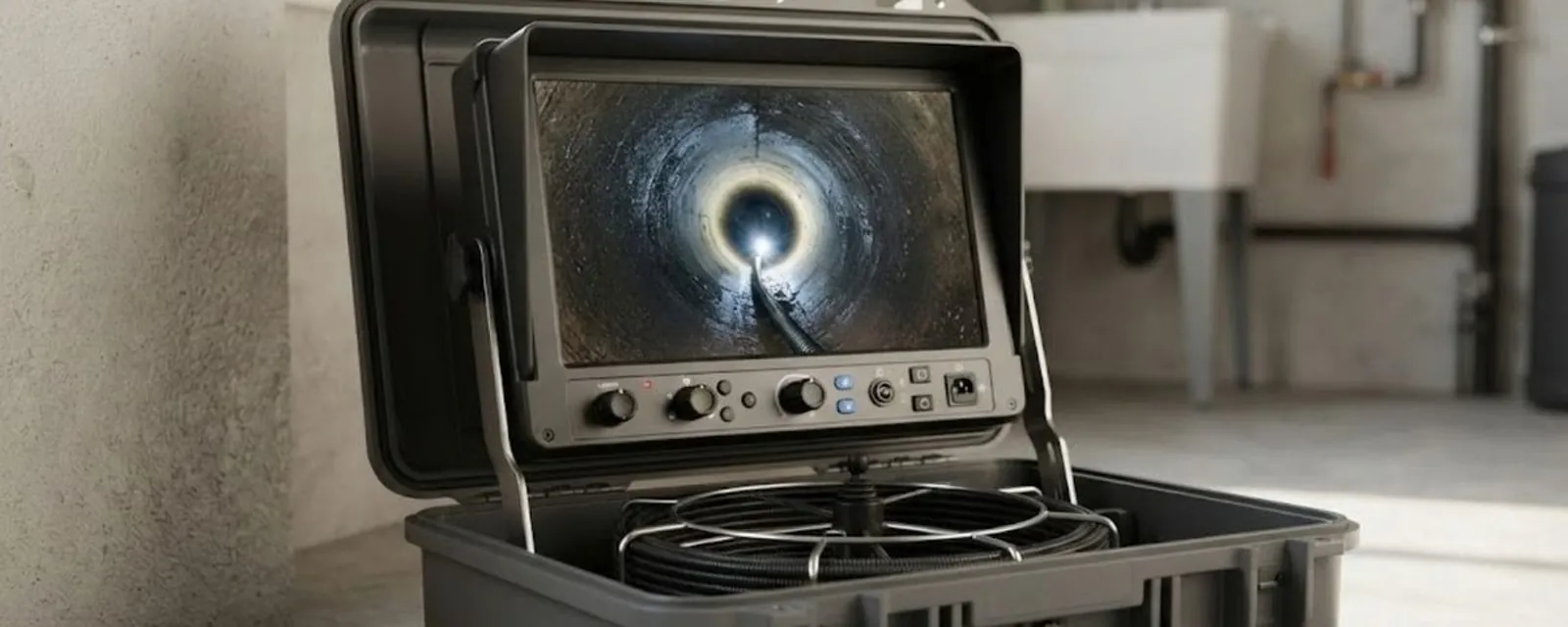
What a sewer camera tells you
A waterproof camera on a flexible cable travels through the line and shows pipe material, joints, cracks, roots, bellies and debris. A locator finds the depth and position of what the camera sees.
That information answers the question every sewer problem raises. Is this a clog or a broken pipe? The answer decides whether you pay for cleaning, a repair or nothing at all.
If you are buying a house in an older neighborhood such as Fulton Heights, a camera inspection shows the actual condition of the line instead of leaving you to guess from the age of the house.
When an inspection is worth doing
Buying an older home
Salisbury has many houses from the early 1900s, and sewer condition is not visible from a home inspection.
Recurring slow drains
Repeat clogs often have a structural cause.
After a major backup
The camera shows whether the blockage cleared completely.
Planning a remodel or addition
Know the line before you build near it.
How the inspection works
Access the line
We use a cleanout or pull a toilet to reach the line.
Record the run
We record the camera video so you can watch it.
Locate problems
We mark depth and distance to any defects.
Explain the findings
We review the footage with you and recommend next steps.
Old pipes in Salisbury and what we look for
Homes from the first half of the twentieth century commonly have clay or cast iron lines. Clay joints let roots in, and cast iron corrodes from the inside. Newer homes may have PVC or ABS, where problems are more likely to be sagging or poor joints.
The camera shows which pipe you have and whether it needs attention now, later or not at all. If the footage shows a problem, our sewer line repair page explains the repair options.
What the camera can find
| Finding | What it usually means | Typical next step |
|---|---|---|
| Roots in joints | Gradual intrusion | Clean and plan repair. |
| Belly or sag | Water pools in a low spot | Monitor or repair. |
| Cracked or broken pipe | Active failure | Repair. |
| Clear, intact pipe | Healthy line | No action. |
What affects the price of a camera inspection
Pricing is explained before we start.
Insurance may require documentation before covering a sewer claim. Inspection footage is useful evidence.
To book an inspection, call (704) 951-1635.
Getting the most from your inspection
A few steps make the findings more useful.
- Tell us the age of the house and any past sewer work.
- Show us where the cleanout is if you know.
- Mention any recurring symptoms and when they happen.
- Ask for the video and a written summary.
How buyers and sellers use inspection footage
Buyers use the video to negotiate repairs or credits, and sellers use a clean video to show the line is sound. Either way, a recording is better than a guess.
Keep the footage with your closing documents. If the line is clear today, that record also gives you a baseline to compare against years from now, which helps if a problem develops later.
What the footage will not tell you
A camera shows the inside of the pipe. It does not show the condition of the soil around it or tell you what will happen in five years.
We note pipe material, visible defects and any places where the line sags or offsets, and we are straightforward about how confident we are in each observation. Where something is uncertain, we say so and suggest what additional checking would settle it.
That honesty matters when a decision involves thousands of dollars at a home sale.
Code and standards for sewer camera inspection
A camera inspection is an inspection tool, not a code approval. What it records, though, is judged against the standards in the International Plumbing Code (IPC), which North Carolina bases its plumbing code on.
We describe findings plainly and do not pretend to certify a line.
Camera inspection questions
Most inspections take about an hour, depending on access and line length.
Yes. We provide the footage so you can share it with a buyer, seller or insurer.
For an older house, yes. A scope shows problems a standard inspection cannot see, and repairs can be negotiated before closing.
We explain the options and price. If it is a blockage, see sewer line cleaning. If it is a break, we discuss repair.
Yes. We can inspect branch lines and floor drains when access allows.