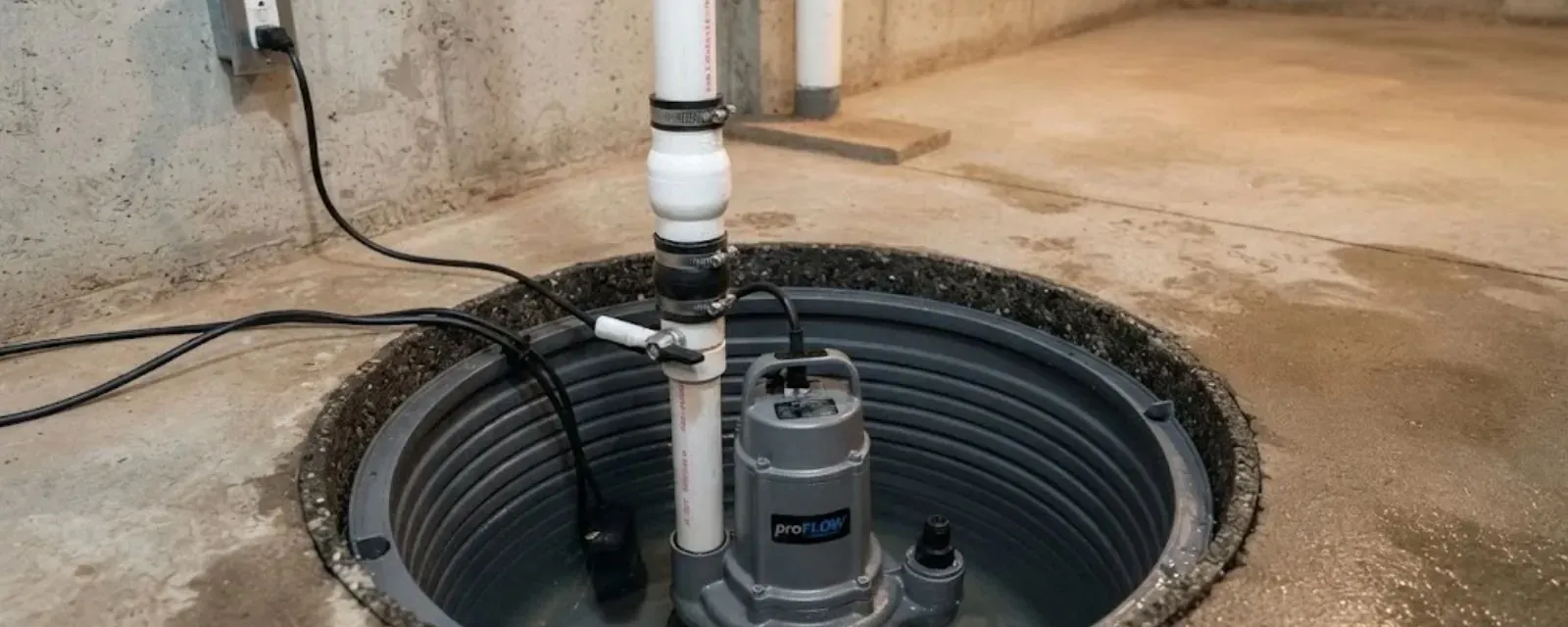
Water rising in the pit or basement
If water is coming in and the pump is silent, check that it is plugged in, the breaker has not tripped and the float can move freely. These are quick checks and they are often the cause.
If it still will not run, call (704) 951-1635. While you wait, move valuables off the floor and keep away from water near electrical outlets.
- Check the plug and breaker.
- Lift the float to see whether the pump starts.
- Keep electronics and stored items off the floor.
- Stay out of standing water if outlets are nearby.
Signs your sump system is failing
The pump runs constantly
A stuck float, a failed check valve or a high water table can keep it running. Constant running wears the motor out faster.
It makes noise or vibrates
Worn bearings, debris in the impeller or a pump that has lost its prime.
Water returns after the pump shuts off
The check valve is not holding, so discharged water flows back into the pit.
It has never been tested
A pump that sits idle for years can fail the first time it is needed.
Why a backup pump matters
Storms that fill a sump pit often come with power outages, and a pump without power is just a bucket. A battery backup pump or a water-powered backup keeps working when the lights go out.
We discuss which type fits your pit and discharge setup, because the best backup depends on how often the pump runs and how much water it moves.
Where sump pumps are needed
Basements and crawl spaces
Groundwater collects below grade.
Low-lying yards
Surface water drains toward the house.
Finished basement spaces
Protecting carpet, drywall and belongings.
Sloped lots
Water runs toward foundations after heavy rain.
Primary pump types
| Type | Strength | Consider |
|---|---|---|
| Submersible | Quiet, sits in the pit, handles most homes | Harder to service, replace as needed. |
| Pedestal | Motor above the pit, easy service | Louder, takes up space. |
| Battery backup | Works during outages | Battery needs testing and replacement. |
Installing a sump system the right way
A good installation has a sealed pit, a pump sized to the water volume, a check valve, a discharge line that carries water well away from the foundation and a float switch with room to move.
We route the discharge to a safe location and avoid sending it where it can freeze or flow back toward the house. If you are installing as part of other new work, see plumbing installation.
What affects sump pump pricing
Repair and installation are quoted after we see the pit.
Standard homeowners policies often exclude groundwater and sump overflow unless you add water backup coverage. Check before storm season.
For a price, call (704) 951-1635.
Maintenance that keeps a pump ready
Once or twice a year, clean the pit of silt and debris, check that the float moves freely and test the pump with a bucket of water. Check the discharge line outside to make sure it is clear and drains away from the house.
If you have a battery backup, replace the battery on schedule. A pump that works when you test it is the only kind worth trusting before a storm.
Ejector pumps are not the same as sump pumps
A sump pump moves groundwater away from the house. A sewage ejector pump lifts waste from a basement bathroom or laundry up to the main drain, and it needs a sealed lid and a vent.
If you have a toilet or sink below the main sewer line, tell us on the call which pump you have. The repair and the safety steps are different for each.
Code and standards for sump pump service
A sump installation is judged against the International Plumbing Code (IPC) as adopted in North Carolina, and the pump wiring falls under the National Electrical Code (NEC).
Discharge routing is a local question, so confirm what the utility and the City allow before you finish.
Pump not working?
Call the 24/7 line. We will schedule a plumber.
Questions we hear from Salisbury homeowners
Yes. We answer 24/7, and a failed pump during a storm gets priority scheduling when availability allows.
A few times a year, and before storm season. Pour a bucket of water into the pit and confirm the pump starts and drains.
Many last around seven to ten years, less if they run constantly.
Some crawl spaces collect water and benefit from one. We look at drainage and humidity before recommending.
If your basement floods during outages, yes. Ask us about a backup sized to your pump. See leak detection if you are unsure whether water comes from the ground or a pipe.