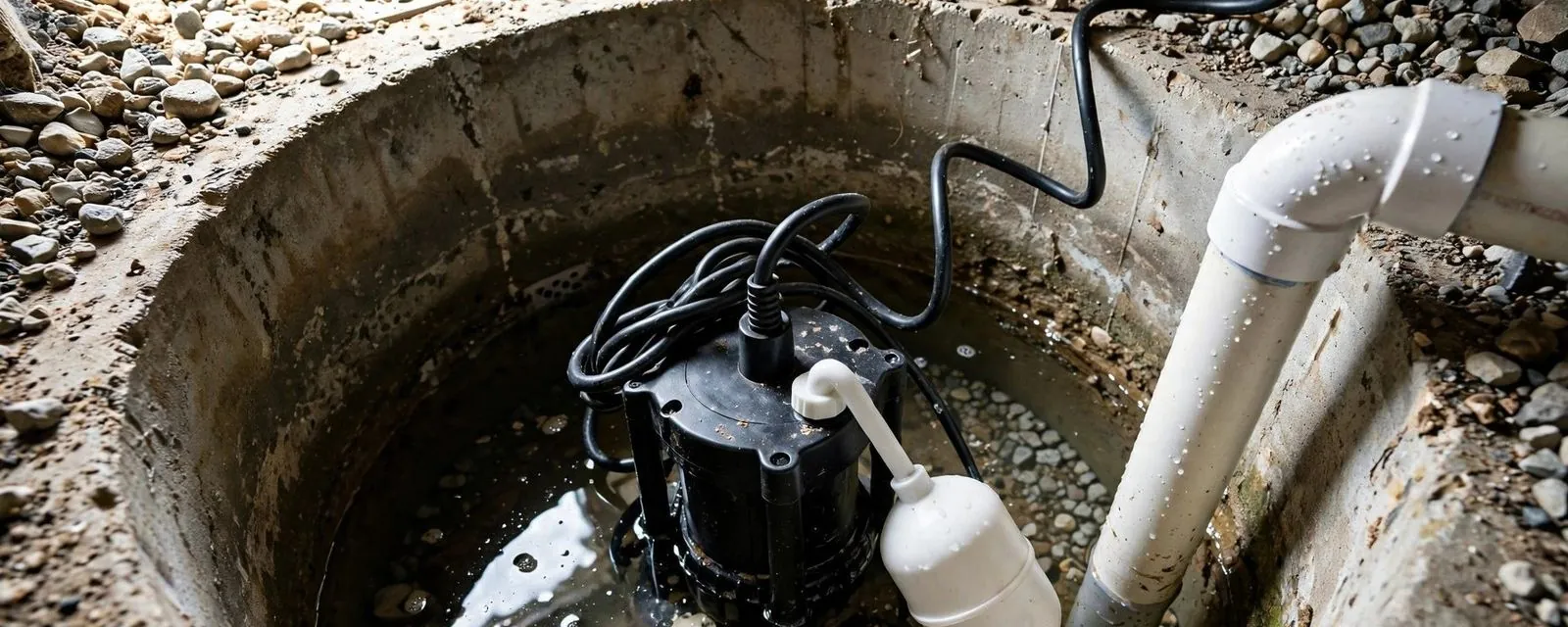
What a sump system includes
A sump system has a pit that collects water, a pump with a float switch, a check valve that stops water flowing back, a discharge line that carries water outdoors and ideally a backup power source.
Each piece matters. A strong pump with a poor discharge line still floods the basement. If you are replacing an existing pump, our sump pump service page covers repairs and replacements.
How installation works
Locate the pit
Choose a low point where water collects.
Set the liner
Dig and install a pit liner with a sealed lid.
Install pump and valve
Place the pump, add a check valve and connect discharge.
Test
Pour water into the pit and confirm the pump starts and drains.
Sizing the pump to the water
A pump is rated by how much water it moves at a given height. A larger pump is not always better, because a pump that is too strong for the pit cycles on and off rapidly, which wears the motor.
We look at how fast the pit fills during rain, how high the water must be lifted and how long the discharge run is, then choose a pump with a comfortable margin.
Pump types
| Type | Strength | Consider |
|---|---|---|
| Submersible | Quiet, handles most homes | Hard to service in the pit. |
| Pedestal | Motor above the pit | Louder, more visible. |
| Battery backup | Works in outages | Needs battery care. |
Why the check valve matters
A check valve stops the water in the discharge line from falling back into the pit after each cycle. Without one, the pump has to move the same water over and over.
Check valves wear out, and a clicking sound after the pump stops often means the valve is failing.
Where discharge should go
Away from the foundation
Several feet away so water does not return.
Downhill
Gravity helps keep the line clear.
Not into the sanitary sewer
Many utilities prohibit it, so confirm.
Not onto a neighbor's yard
Respect property lines.
Pit and lid details
A sealed lid keeps debris and humidity out of the pit and reduces odor. It also stops small objects from falling in and jamming the float.
Set the pump on a flat base so it does not tilt, and keep the float clear of the wall. A pump that cannot float freely will not switch on when you need it.
What to confirm locally before you discharge
Salisbury-Rowan Utilities operates the sanitary sewer for Salisbury, Spencer, East Spencer, Granite Quarry, China Grove and Landis. Clean groundwater from a sump pump generally should not go into the sanitary sewer, and many utilities prohibit it, so contact SRU customer service to confirm what applies to your address.
Plumbing work for a new installation falls under the plumbing section of the North Carolina State Building Code, which is based on the International Plumbing Code (IPC), and the City of Salisbury Development Services office can say what permits apply.
Backup power options
Pick one that fits your pit.
- Battery backup pump on a separate float.
- Water-powered backup where municipal pressure allows.
- Generator hookup for the main pump.
- Alarm that signals a high water level.
- Regular battery testing on a schedule.
Storms, outages and sloped lots
Rainfall in the Piedmont can be heavy, and the storms that fill a sump pit often bring outages. That is when a backup pump earns its keep.
Homes on sloped lots in Landis and China Grove can see water flow toward the foundation, and a pump with a properly routed discharge line helps.
Signs the discharge line is the real problem
A pump that runs and runs may be pumping the same water in a loop, because the discharge outlet is too close to the house or slopes back toward it. Water leaves the pipe, soaks into the ground and drains right back to the pit.
Extend the discharge farther from the foundation and check the slope. Sometimes that simple change cuts the run time of the pump in half.
What a professional installation adds
A plumber brings the right sump liner, a pump matched to the pit, a check valve and a discharge route that follows local rules. They also test the system under load before they leave.
That test matters, because a pump that works with a trickle of water can fail the first time real rain fills the pit. We also label the shutoff and show you where the discharge line ends, so you can check it after a storm.
Maintenance that keeps it ready
Test the pump a few times a year. Clean the pit of silt and debris, and make sure the float moves freely. Check the discharge outlet for ice, leaves or blockages.
If water ever comes in and the pump does not run, call. See also leak detection if you are unsure whether the water is from the ground or a pipe.
Local questions answered
It depends on your lot and foundation. Damp basements and crawl spaces after rain are the usual sign.
Away from the foundation and not into the sanitary sewer. Confirm with SRU.
Many last about seven to ten years, less if they run constantly.
A primary pump stops. A battery backup keeps pumping.
Often only with a water backup endorsement. Check your policy.