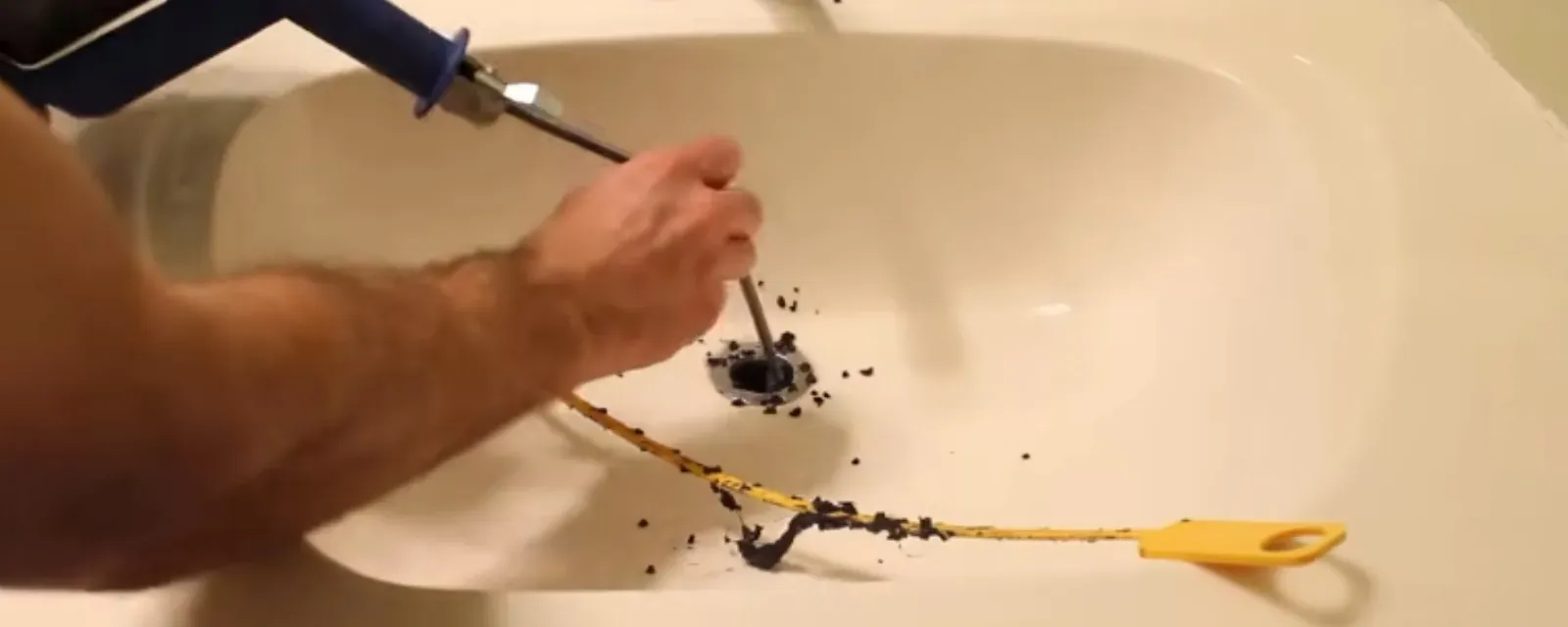
Reasons a kitchen sink drains slowly
Grease coats the inside of the pipe and narrows it gradually, so water takes longer to leave. Food residue and soap film build up the same way. A partial blockage in the trap, the disposal or the line behind the wall can slow flow without stopping it.
Venting matters too. If air cannot enter the drain system, water drains in a slow gulp and the sink gurgles. A blocked vent on the roof is a less common but real cause.
Clues that point to the cause
Slow only in the kitchen
The problem is probably in the kitchen branch line.
Gurgling after draining
A venting problem is likely.
Smell from the sink
Food and grease are decomposing in the trap or disposal.
Dishwasher backs up into the sink
The shared drain line is restricted.
Slow after every cleaning
Buildup is returning quickly.
Check the dishwasher and disposal connections
A dishwasher that drains through the sink line can slow a kitchen sink when its hose or air gap clogs with food. Likewise, a disposal with a partially jammed grinding chamber leaves little room for water to pass.
Run the dishwasher drain cycle while watching the sink. If the basin rises or gurgles, the connection is part of the problem.
What to try before calling
Clear the trap
Place a bucket and remove the P-trap to clean it.
Check the disposal
Run it with cold water and clear any jam.
Flush with hot water
Hot water helps soften some grease.
Use a hand auger
A small cable can reach into the branch line.
The hot water test
Fill the basin with hot water and let it go. A clear drain empties in a steady swirl and without gurgling. A restricted one empties slowly and may burp air.
If hot water helps for a day and then the slowness returns, grease is the likely cause, and the line needs more than a rinse.
Slow drain causes compared
| Cause | How to confirm | Fix |
|---|---|---|
| Grease buildup | Slow gradually, smells | Clean the line, consider hydro jetting. |
| Trap debris | Slow right at the sink | Clean the trap. |
| Vent problem | Gurgling | Inspect and clear the vent. |
| Partial blockage in branch | Slow even after trap cleaning | Cable or camera. |
Why a plunger does not always help
A plunger works on a solid clog close to the sink. It does little against a film that has narrowed the pipe over its whole length or against a blockage past a double basin's shared trap.
If you use one, seal the other basin and the overflow with a wet rag so pressure goes down the pipe, not into the air.
Why kitchen grease matters on the Salisbury sewer
Salisbury-Rowan Utilities serves the sewer system for Salisbury and several nearby towns. Fats poured down kitchen sinks cool and solidify in the pipe, whether the pipe is yours or the utility's, and they gradually build until a blockage forms.
A small can for cooking fat is cheaper than any clearing visit. The same advice applies in every town the utility serves, from Spencer to Landis.
Older kitchens in Salisbury neighborhoods
Kitchens in houses from the early twentieth century often drain into old cast iron or galvanized pipe. The inside of these lines roughens over time, so grease and food catch more readily.
In Spencer and China Grove, we often find that a sink that drains slowly has a rough branch line behind the wall. A camera shows it and a cleaning can restore flow.
Habits that keep the sink moving
Simple changes prevent most slow drains.
- Scrape plates into the trash before rinsing.
- Pour cooking fat into a can, not down the sink.
- Run hot water after washing greasy dishes.
- Use a strainer in the basin.
- Run cold water when using the disposal.
What the camera finds in a stubborn kitchen drain
When cleaning does not hold, a camera on a small cable shows the pipe wall behind the sink. We often see a rough ring of grease and food in the first few feet, or a section of old pipe with pitting that catches debris.
Seeing the inside of the line changes the conversation. You can decide whether to clean it on a schedule or replace the worst section while the cabinet is open.
When it is time for a professional
If you have cleaned the trap and the sink is still slow, or if the problem keeps returning, a plumber can clear the branch line and check the vent. Our drain cleaning page describes how.
If other drains in the house are also slow, the problem may be in the main line instead.
Codes and standards worth knowing
Trap and vent requirements in the International Plumbing Code (IPC), adopted in North Carolina, are one reason a slow drain can be a venting problem.
Local questions answered
The partial blockage may be deeper than the plunger reaches, or it may be buildup on the pipe walls.
Yes. A blocked vent can make water drain in surges and gurgle.
We advise against it. It can damage older pipe and make later work hazardous.
Grease is a problem for any sewer system, and SRU serves several towns. Keep it out of the drain.
Many homes never need it with good habits. Recurring slowness is a sign to look deeper.