The usual suspects
In a bathroom sink the pop-up stopper and its pivot rod sit right in the drain path and collect hair and soap. Behind them the P-trap holds sludge, and the vent in the wall may be restricted.
Bathroom drains slow more gradually than kitchen drains. Because they do not see much grease, the culprits are hair, toothpaste, shaving residue and soap scum.
Fix it from the top down
Remove the stopper
Lift or unscrew it and clean the hair off.
Clean the trap
Place a bucket under it and remove the trap to clear it.
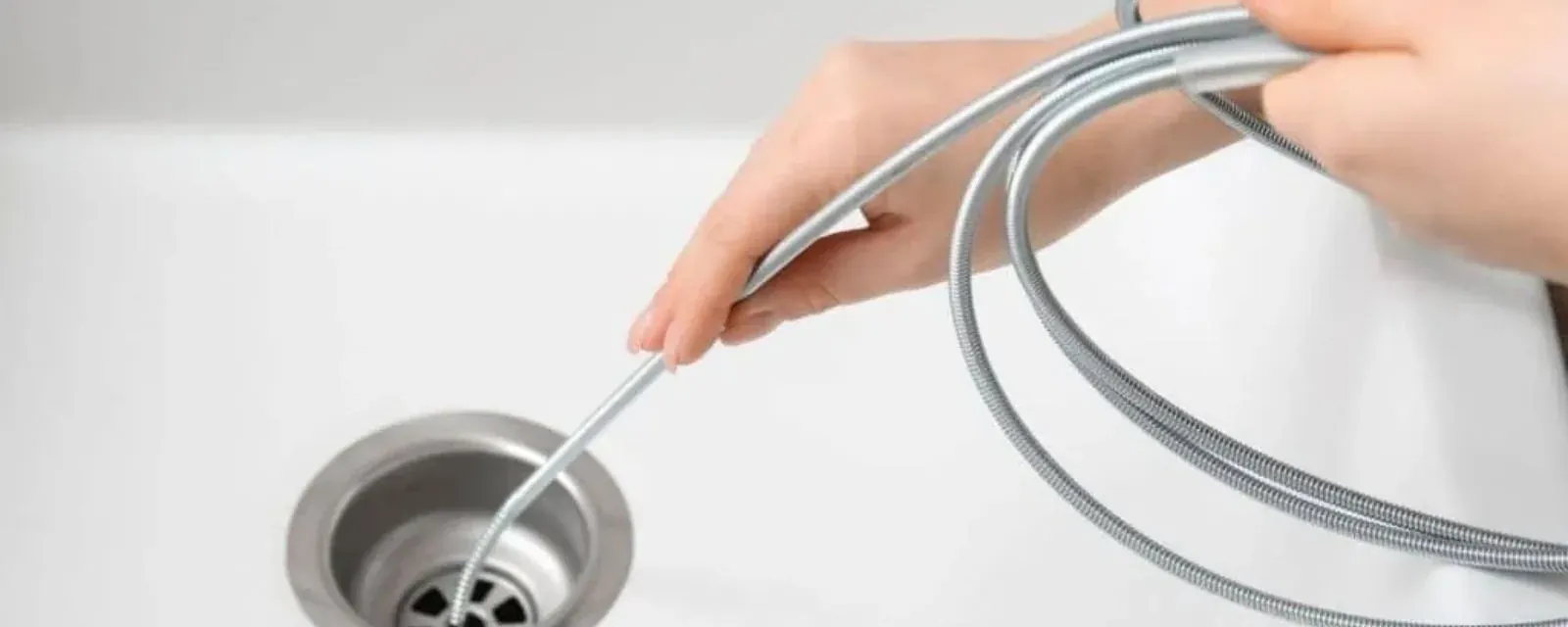
Snake the line
Use a small drain snake into the wall pipe.
Test the flow
Run water and watch for gurgling.
Why the overflow channel matters
Most bathroom sinks have a hidden overflow channel that runs from a small hole near the top of the basin down to the drain. It can hold a surprising amount of gunk, and it contributes to odors.
A narrow brush or a pipe cleaner pulled through the overflow hole helps. Pour a kettle of hot water through afterward to flush out what you dislodged.
What the symptoms say
Slow only in this sink
The branch from this sink is restricted.
Gurgling after draining
The vent may be blocked.
Water pools around the stopper
The pop-up is clogged or misadjusted.
Smell from the drain
The trap is dirty or dry.
Check the stopper adjustment
A pop-up stopper that does not lift fully restricts the flow. Under the sink, a pivot rod and a lift rod connect it to the handle, and the clevis strap has several holes for adjustment.
Moving the rod to a different hole can open the stopper wider without any parts to buy.
Causes and fixes
| Cause | Sign | Fix |
|---|---|---|
| Hair on the stopper | Slow right away | Clean the stopper. |
| Soap and sludge in the trap | Gradual slowing | Clean the trap. |
| Vent blockage | Gurgling | Clear the vent. |
| Branch line buildup | Persistent slow flow | Cable the line. |
Toothpaste, hair products and a slow build
Gels, pomades and toothpaste cling to the drain walls and trap hair like glue. The film is thin at first and unnoticeable, but it builds with every use.
A monthly cleaning with a drain brush and a rinse with hot water handles most of it before it becomes a problem.
Soft water, soap and scum
East Spencer's published water quality report lists hardness near 23 ppm, which is soft. Soft water leaves little mineral scale, but soap lathers heavily in it and can leave a slick film that builds with hair in drains.
Rinsing the sink with hot water after use and cleaning the stopper monthly keeps that film from thickening. The same utility serves Salisbury, Spencer, Granite Quarry, China Grove and Landis, so this applies across the area.
Older bathrooms in Salisbury homes
Bathrooms in houses from the early twentieth century often have older drain pipe behind the wall. The inner surface may be rough, which catches hair and soap more readily than newer pipe.
In East Spencer and China Grove, a plumber can clear the line and look inside with a camera if needed. See drain cleaning for how that works.
Keeping the sink draining well
Small steps prevent most slow drains.
- Clean the stopper every month.
- Use a drain strip to catch hair.
- Rinse with hot water after shaving.
- Skip chemical drain cleaners.
- Fix a dripping faucet so it does not keep the trap wet and smelly.
Shared drains in an older bathroom
Older houses sometimes route the sink drain into the tub or shower drain before it reaches the stack. A restriction in the shared pipe slows both fixtures at once.
If the tub and the sink both drain slowly after you clean the stopper, call for a branch line cleaning. The problem is behind the wall and not at either fixture.
Tools worth owning
A small plastic drain strip with barbs pulls hair out of a stopper housing in seconds. A plastic hand auger reaches farther than a wire and is gentle on the pipe.
Keep a bucket, a pair of slip-joint pliers and a rag with them. With those, most bathroom sink problems are a ten-minute job. If a slip nut is stuck, do not force it. Warm it with a hair dryer or call a plumber, because a cracked trap arm costs more than the call.
When to call
If you have cleaned the stopper and trap and the sink is still slow, call a plumber. A slow sink that affects the tub or shower next to it points to a shared branch line.
If gurgling or odors appear in several fixtures, tell us. That can mean a vent or main line issue instead of a sink problem.
Codes and standards worth knowing
Venting standards in the International Plumbing Code (IPC), adopted in North Carolina, explain why a blocked vent slows a sink.
Local questions answered
Look at the stopper, the trap and the vent. Hair and soap film are the most common causes.
Soft water lathers heavily, which can leave a slick film, but hard mineral scale is less of an issue.
Yes. Restricted air flow makes water drain slowly and gurgle.
We advise against it. Mechanical cleaning is safer for older pipe.
Most lift out or unscrew. Some have a pivot rod nut under the sink.