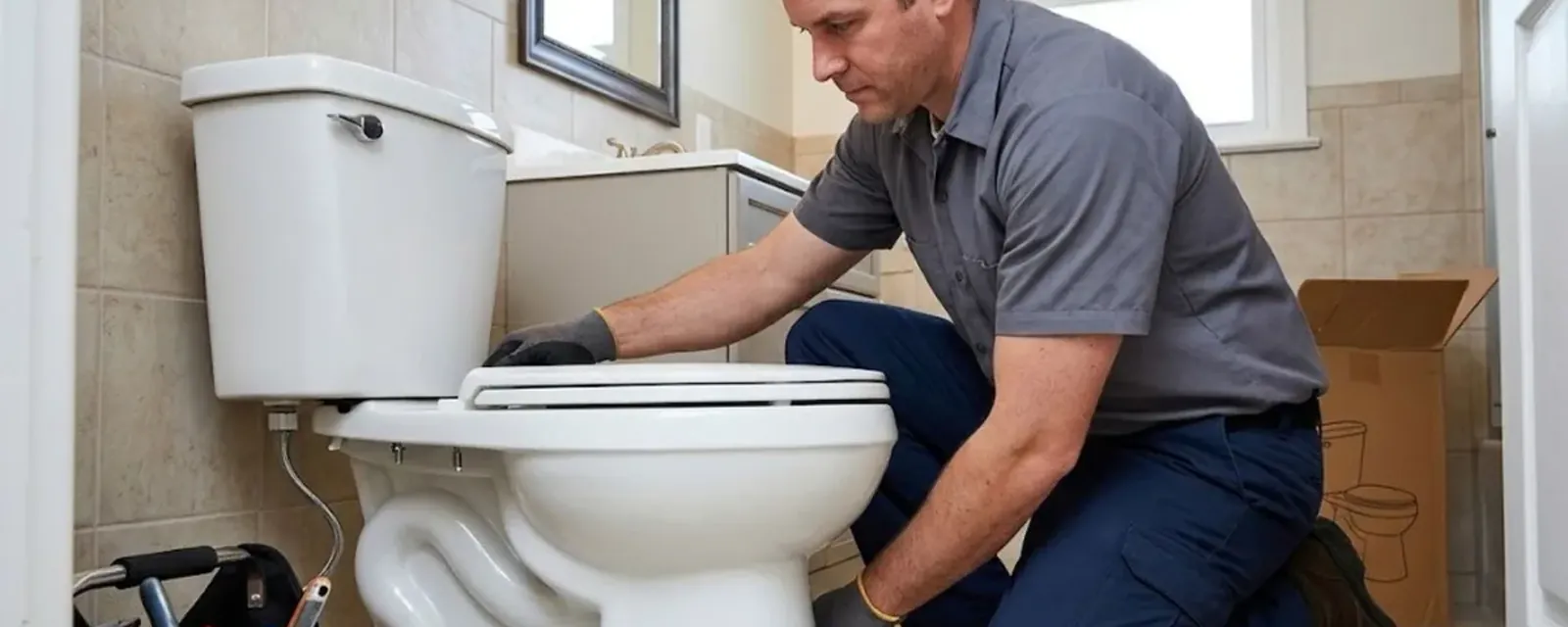
What needs to be in place
The drain is usually a three- or four-inch pipe that connects to the toilet flange on the floor. The vent keeps air moving so the drain does not siphon the trap. The supply is a small cold water line with a shutoff valve near the toilet.
If any of these is missing or poorly placed, the toilet will gurgle, drain slowly or leak. This is why a new toilet is more than a fixture swap, and our plumbing installation page covers the wider work.
Steps in a new toilet installation
Plan the location
Set the flange where the drain pipe can reach it with proper slope and venting.
Rough in the drain and vent
Run drain and vent pipe before walls close.
Run the supply
Install a cold water line and shutoff valve.
Set the toilet
Secure the flange, set the bowl and tank and test.
Choosing a toilet before the plumbing is roughed in
Toilets come in round and elongated bowls, in standard and comfort heights and with different rough-in measurements. The rough-in is the distance from the wall to the center of the drain, and most are twelve inches, though ten and fourteen inch models exist.
Buy or at least pick the toilet before the drain is set. A mismatch means moving a flange, which is far easier before the floor is finished.
Measurements that matter
Rough-in distance
Most toilets need the flange centered about twelve inches from the finished back wall.
Clearance at the sides
Leave room on either side for cleaning and comfort.
Flange height
The flange should sit flat on the finished floor.
Supply location
The shutoff should reach without strain.
Water efficiency is worth a look
Newer toilets use far less water per flush than the models from a few decades ago. A well-reviewed efficient toilet flushes well and takes pressure off your water and sewer bills.
Read independent flush tests rather than relying on the box.
Common installation problems and fixes
| Problem | Cause | Fix |
|---|---|---|
| Toilet rocks | Uneven floor or low flange | Shim or reset the flange. |
| Leak at base | Failed wax ring | Replace the seal. |
| Gurgling | Poor venting | Add or correct the vent. |
| Weak flush | Partial blockage or poor design | Clear drain or choose a different model. |
What goes wrong when the install is rushed
A flange that is too low lets the wax seal fail. A vent that is too small makes the toilet gurgle. A drain with too little slope collects paper and clogs.
Each of these is cheap to fix during rough-in and costly after the walls are closed, which is why we test before we cover anything up.
Rules and permits that apply in Salisbury
North Carolina requires a license to engage in plumbing contracting for pay, under G.S. 87-21, and exempts minor repairs and replacements that do not change pipe routing, size, fuel type or venting. Adding a toilet where none existed changes the drain and vent, so it falls on the regulated side.
The City of Salisbury Development Services office at 132 N. Main St issues permits for plumbing systems, and it keeps office hours Monday through Friday from 8:30 to 5. Confirm what your job needs before work begins, and ask your plumber to pull the permit.
Old houses, new toilets
Salisbury has plenty of early twentieth-century homes where a bathroom was added later. Older cast iron stacks and clay branch lines may not be in the best shape, and a new toilet is a good reason to check them.
In Spencer and China Grove, where many homes date from the railroad era, we often find original shutoff valves that no longer close. We replace them when we install a new toilet.
Questions to settle before you start
These decisions affect cost and location.
- Do you need a taller seat height?
- Is there room for a vent through the wall or roof?
- Can the drain reach the stack without crossing a beam?
- Who will pull the permit?
- How will the old toilet be removed?
Planning the floor and the framing
A toilet drain passes through the floor, and a joist in the way can block the best route. In an older Salisbury house, the framing may be smaller or spaced differently than in modern construction, so notching joists needs care.
Tell the plumber about any changes you plan to the floor, such as new tile, so the flange height is set for the finished surface and not for the bare subfloor.
When to call a plumber
Replacing a toilet in the same spot is a reasonable project for a handy homeowner. Adding a toilet, moving one or finding rot or damaged pipe when the old one comes up is where a plumber earns the fee.
If you only need a leak fixed or a running toilet repaired, see toilet repair and installation.
Codes and standards worth knowing
Toilet flange, drain and vent requirements come from the International Plumbing Code (IPC), which North Carolina adopts in its plumbing code.
Local questions answered
Usually yes, because it adds drain and vent work. Contact Salisbury Development Services to confirm what applies to your address.
Replacing a fixture in place is generally treated as a minor replacement. Adding or moving plumbing is licensed work if done for pay.
Most codes ask for clearance around the bowl. A plumber can check your layout against the plumbing code.
Repair the subfloor before setting the new flange. Water damage there will undo a good installation.
Not necessarily. A camera or inspection tells you whether the existing pipe is sound.