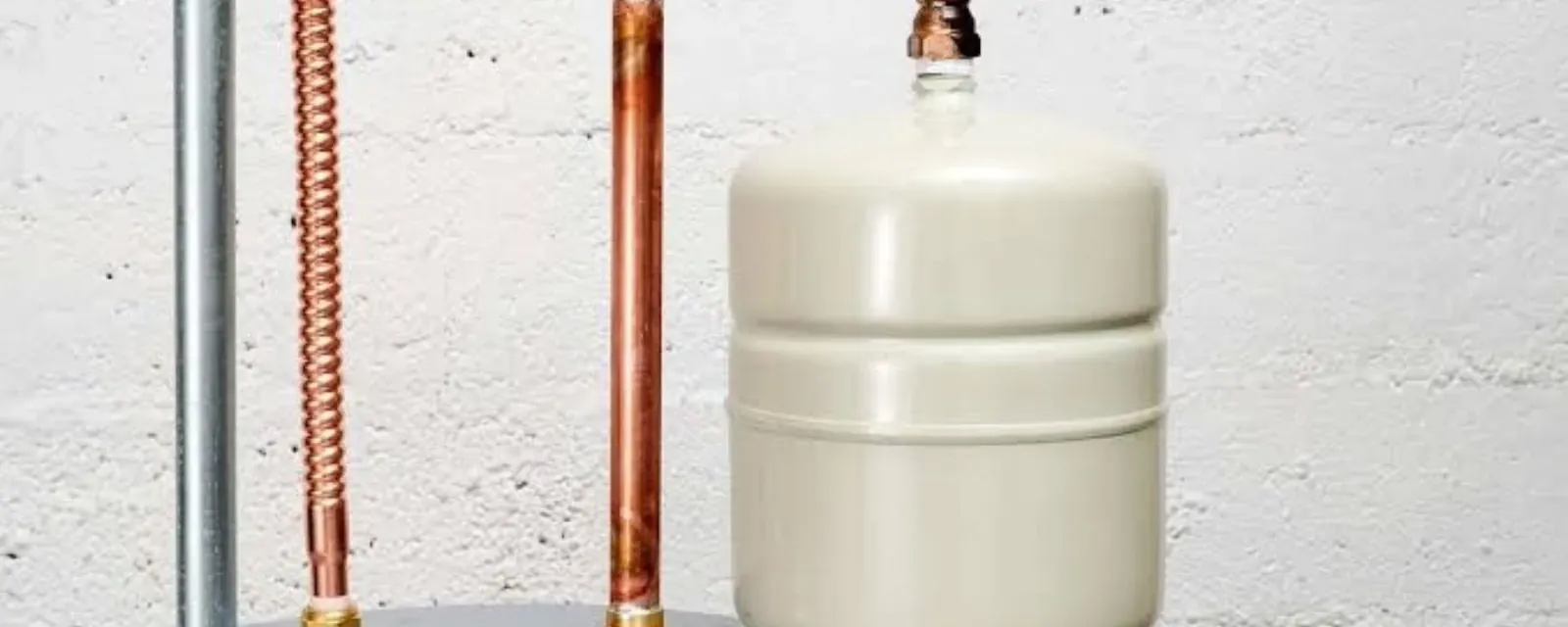
What an expansion tank is and why it matters
An expansion tank is a small pressurized vessel with a rubber diaphragm, mounted on the cold water pipe near the water heater. When the heater runs, the expanding water pushes into the tank instead of building pressure in the pipes.
Without one, thermal expansion can make the temperature and pressure relief valve drip, stress fittings and shorten the life of the water heater. If you are planning a water heater replacement, ask whether an expansion tank should be part of it.
Signs your system needs an expansion tank
Dripping relief valve
The valve is releasing expanded water.
Banging pipes
Pressure spikes as the heater cycles.
Worn fixtures
High pressure shortens the life of faucets and valves.
Closed system
A check valve or pressure reducing valve on the supply line traps the expanding water.
What happens inside a closed system
Water expands by a small but real amount when heated. In an open system, that volume simply pushes back into the city main. A backflow preventer or pressure reducing valve blocks that return path.
The extra volume has to go somewhere, and without an expansion tank it goes into your pipes, fixtures and the heater itself. Over time that shows up as a dripping relief valve, a noisy pipe or a heater that fails earlier than it should.
How an installation goes
Check pressure
We measure water pressure and confirm the tank size.
Shut off and drain
We shut off water and open a faucet to relieve pressure.
Mount the tank
We install it on the cold line with a support.
Set air pressure
We set the tank's air charge to match line pressure.
A quick pressure check you can do
Screw a simple pressure gauge onto an outdoor spigot or the washing machine connection and read it when the water is not running. Then run hot water for a few minutes and read it again after the heater cycles off.
A big jump, or a number that creeps past the normal range, points to thermal expansion. Share the numbers with your plumber.
Tank size and fit
Sizing depends on the water heater and the line pressure.
| Water heater size | Typical tank | Note |
|---|---|---|
| Up to 40 gallons | Smaller expansion tank | Check manufacturer guidance. |
| 50 to 80 gallons | Mid-size tank | Common in family homes. |
| Over 80 gallons | Larger tank | Often needs a larger unit. |
Mounting and orientation
Expansion tanks are supported by the pipe, and larger tanks need an additional bracket. We prefer to mount them above the heater on the cold supply line, with the connection pointing the way the manufacturer specifies.
Orientation matters for drainage and for the diaphragm. A tank that hangs the wrong way can sit full of water and fail early.
Setting the air pressure correctly
The tank's air charge must match the home's water pressure. A tank set too low fills with water and stops cushioning. One set too high does not take in enough.
We check the pressure with a gauge and adjust the air with the tank empty of water. It takes a few minutes and makes the difference between a useful tank and a decorative one.
Permits and codes for water heater work in Salisbury
Water heater replacement is regulated under the plumbing section of the North Carolina State Building Code, which is based on the International Plumbing Code (IPC), and the City of Salisbury Development Services office at 132 N. Main St issues permits. The relief valve, its discharge pipe and thermal expansion control are part of what an inspection looks for.
Salisbury-Rowan Utilities supplies the water, and the pressure at your house depends on where you are in the system and any pressure reducing valve in your plumbing. Ask your plumber to read the pressure on the day of installation.
Maintenance for an expansion tank
A few minutes a year keeps it working.
- Look for water dripping from the tank's air valve.
- Tap the tank. A waterlogged tank sounds dull all over.
- Check the pressure at the faucet.
- Replace the tank if it fails the tap test.
- Have it checked when the heater is replaced.
What it costs to ignore thermal expansion
The damage from thermal expansion is slow and quiet. A relief valve that drips now and then, a faucet that wears out early, a washing machine inlet valve that fails and a water heater tank that corrodes sooner than expected can all trace back to unmanaged pressure.
An expansion tank is a small part by comparison. Adding one during a heater replacement is the easiest time, because the water is already off and the piping is open.
Which homes need one most
Homes with a pressure reducing valve, a backflow preventer or a check valve at the meter form a closed system. Many newer houses fall into this group, and some older ones do after upgrades.
If you live in Landis or Granite Quarry and are unsure which system you have, a plumber can check in a few minutes.
Local questions answered
If your plumbing is a closed system, yes. A quick pressure and valve check confirms it.
Many last five to ten years. A tank with a failed diaphragm should be replaced.
It often does, if thermal expansion is the cause. A failing valve itself may need replacement.
It is usually part of the water heater permit. Salisbury Development Services can confirm.
Generally no, because there is no stored hot water to expand. Check manufacturer guidance for your model.